





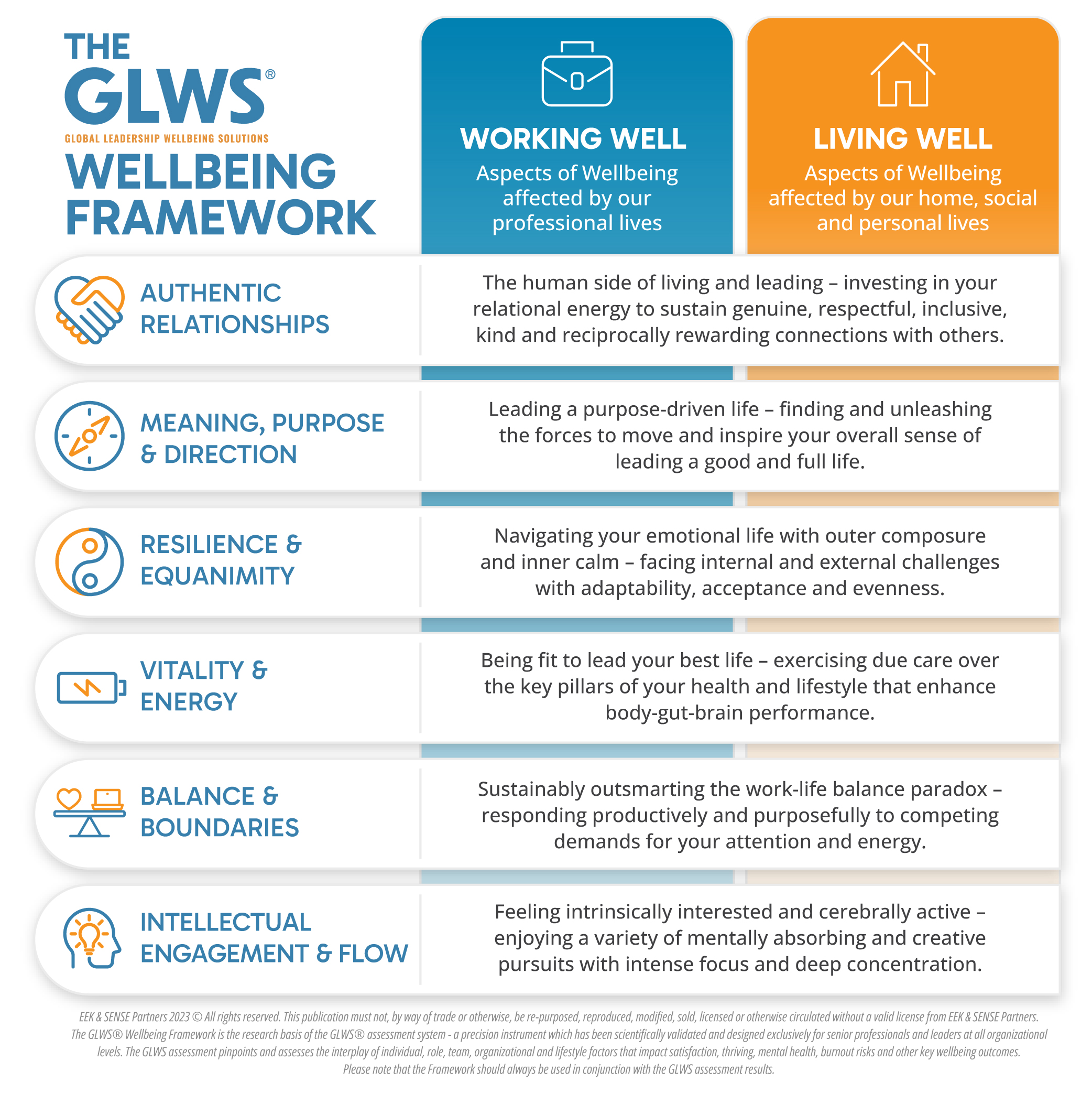















The GLWS is the best in its class, not just for measuring the wellbeing of leaders, but giving them strategies to be consistently at the top of their game, both at home and at work. Every leader deserves the transformational power of a GLWS survey and debrief.
Paul Mitchell MAPS,Founder of the
Human Enterprise and Interest Group
in Coaching Psychology 
The GLWS has empowered our leaders to identify the key
ingredients and actions within their control to build a
sustainable and successful career -
one that not only thrives in a high-pressure environment, but
also fosters meaningful relationships at work and aligns with
the life they truly value.
Louise FerrisChief People Officer, McCullough Robertson Lawyers
We've been using the GLWS in our Senior Leader Wellbeing Programme for all senior leaders and their teams. The feedback has been consistently positive, showing that GLWS effectively provokes insights, awareness and clarity about wellbeing with strong evidence that leaders are making important changes both individually and collectively as a team. I highly recommend any organisation to use GLWS and see the benefits that will truly unfold.
Deb McEwenHealth & Wellbeing Strategic Programme Manager, Heathrow Airport
What has been so powerful for the participants is how tangible the outcomes are. The GLWS allows you to fast-track the coaching conversation and immediately identify which aspects of wellbeing need attention. The conversation very quickly becomes about brainstorming actions that will improve overall wellbeing. It’s such a positive and empowering tool.
Lauren JaunceyFormer Head of Diversity & Inclusion, Australia Post
This accreditation is invaluable for any leader serious about creating a thriving, resilient workplace culture. The evidence-based framework, insights and tools have given me the confidence to integrate into my service offerings and quickly see the positive impact and value for my clients.
Penny Ward,Executive Coach
The GLWS is a game changer for anyone implementing a
wellbeing framework in an organisation or providing
wellbeing coaching. As with any organisational change
management, it all needs to start at the top.
Joelle BlackburnGM Talent & Culture, Financial Services
The learning was really easy to navigate, and the approach was a good balance of theory and practise. Marisa and the team provided great support throughout the process, and I feel confident of their ongoing support as I begin to use the GLWS.
Bri Hayllar,Psychologist, Transitioning Well
I recently completed the accreditation and found the whole program very valuable. The learning activities, feedback and support embedded my learning and built my confidence to use the GLWS in my coaching practice. It has changed the way I view my own life and the approach I take with my clients.
Bernadette Durrell,Coach, Amalfi Coaching
I would highly recommend GLWS for a team or for individual leaders seeking to improve wellbeing, productivity and performance. Personally, it has helped me be a happier person and more effective leader. As a team we are more positive, resourceful, closer and more willing to take personal accountability for addressing things that affect our wellbeing.
Andrea PearmanFormer General Manager, Marketing & Community, Australia Post
There are absolutely lots and lots of things in the system that we can look at, and you can be very strategic about how you do that, but fundamentally behaviour changes individual by individual. And so, you have to do the work individual by individual in order to affect that change.
Linda JohnstonFormer Executive Director for People & Development, Mallesons
We are witnessing a huge increase in the need and demand for executive wellness. More and more my clients and I are discussing how they spend their time and energy and the difficulties they are experiencing with balancing personal, family and work commitments. The GLWS is invaluable.
Dr Órla NicDomhnaillCEO, Thrive Advisory
“The GLWS program has been life‑changing… it came just in time. I can see now I was on the verge of burnout” ....
“Exceptional, practical and deeply reflective — I can’t recommend it highly enough” ....
“It’s bias‑free, powerful and creates genuine openness for leaders to reflect without judgement”
Leaders own words,Banking & Finance Organisation
By using the GLWS survey to inform the design of high impact wellbeing development sessions, the value for participants and their organisations is increased, especially when participating leaders are experiencing higher demands on their personal resources.
Gerard PennaCEO, Xtraordinary Leaders
The GLWS program has enabled cultural change, giving leaders and teams explicit permission to prioritise wellbeing. It’s helped us move beyond compliance to create a sustainable, high-performing culture.
Sydney Metro Leadership Team
“Life‑changing” ... “A space to breathe” ... “The coaching gave us permission to stop and reset. It changed how we lead — and how we care for ourselves and our communities.”
Leaders own words,School Principal Pilot Program
Working with GLWS was an absolute game changer for our project. They were proactive in suggesting improvements we hadn't even considered, balancing creativity with a practical, business-focused approach. Our team couldn't be happier, and our company work environment is thriving.
David TennenbaumHR Director, Woolworths